Addendum to the Hippocratic Oath

1

I will always respect the ‘Google Maata,’ for she is always ere and better informed than I.

I will work for more than 24 hours straight and not once, even for a minute, will I sit down for rest, lest a media hound snaps that moment of a pause for the world to see and condemn.

I will not expect any pay for my work, for my family’s needs would be taken care of by God and his men.

Any ‘personal time’ or ‘family time’ will be considered a crime, liable to persecution and legal action.

I will be expected to have a contrast enhanced CT vision, to diagnose patients’ illnesses without ordering any ‘expensive tests,’ and to pick up complications, if any, the nanosecond they happen.

I promise, never to err at any time, or subject myself to the risk of being beaten up by the patient’s relatives.

I shall expect, for my work, no respect ; rather, I could be sued anytime for wrongdoing and neglect.

I will neither eat nor drink any food or beverage, remotely linked to any disease, in any case report published by Google, even in the confines of my house, if I chance to visit it at the end of the day.

I will be under constant scrutiny, and all my doings, including the restroom breaks, will be watched over like a hawk, around the clock.

I am neither God nor a normal human being, but a healing machine with Godly powers, dutifully bound to perform miracles in the worst of sickness.

What ails Indian Medicine ? Part one

1


Something is ailing in the Indian medical community. We are no longer the ‘respected’ profession, the parents – including doctors, want to push their children into. As 18 year olds, most of us were coerced into medicine by our families, prepared for the long journey in spite of all odds. The light at the end of the tunnel was becoming valued doctors, admired and appreciated by the community and the country. But the odyssey is long and arduous and full of toils and bumps and obstacles. So it takes a decade and some years more, from graduation to post graduation and then super specialization. And along the way, we come to terms with the reality of how, even in our late twenties, we are financially dependent on our parents, unlike our friends from school who are professionally settled and financially blooming. And by the time we join as consultants in government or private sectors, the rat race has begun at full throttle, to make up for the lost time.


There is nothing wrong with the race to the top. We are professionals, and unlike what some people may think, we have families and we’d like to be paid for the hard work, thank you very much. But unlike other professions, we deal with human lives – in sickness and in health. Ours is not just a shop to run, or a business empire to expand. Ours is not a profession to lure customers, away from the competitors into our lair. Which is why, it is disheartening to see doctors undermine and belittle their colleagues and competitors – in front of the patients and in public.


Professional jealousy, ego, business rivalry or the number race – no reason can justify this atrocity. Saying “ That doctor ruined your case !” or “ That doctor is a fool and knows nothing !” or “ That doctor is a fraud. He cheats his patients,” may earn someone brownie points, with the patient who has come to his clinic after a tremendous amount of doctor shopping, but disgraces medicine, and the medical community as a whole. How can we expect a patient to respect medical professionals if we don’t respect each other ? When we are out there, at each other’s throats determined to bring each other down at any cost ? How will the people trust doctors, if we ourselves, are giving them reasons not to. One doctor is trashing his rival and him, vice-versa. And the karma is turning around a full circle and giving it back to us, beating us down multifold. The irony of it all, is that the only time we seem to be standing together and watching each other’s backs, is when a few disgruntled relatives turn hooligans and thrash one of us down.


All of us our different, some may be more skilled than others, some may be more competent than others, but we can all agree that almost all of us strive towards a common goal – patient care. And none of us, to our knowledge, are unabashedly evil. One doctor’s approach towards a patient’s condition may be different, and what he or she did, may not be what some other doctor would do, but that doctor still acted in good faith and to the best of his or her ability. So it gives us no right to be self-righteous, and shout from the rooftops of how our ‘competitor’ mismanaged a case, and how things would have been so much better, if only the patient had come to us first. If unity binds our community in times of ordeal, when one of us has been horrifically treated by members of the public, or elected representatives thereof, the same thread should bind us in each day of our professional lives. Because though the practical world is all about the competition and the bad mouthing and the shrewd business and the numbers to show it, we are better than that.


Fart Apart

1


I know this will sound pretty gross,

To talk about an enemy, vicious and grandiose,

Who’d attack you when you least expect,

Catch you unawares, unsuspecting and unchecked.


Amidst discerning company and the office gang,

It will hit you, unannounced, with a loud bang,

Whispering sweet nothings to your sweetheart,

It’d erupt from your bottom, the giant fart,

The fiend, the foe, the deadly devil,

That will blow apart your pride, to rock bottom level.


Make no mistake, and never underestimate its power,

Especially after a hearty meal of beans and cauliflower,

You’d think it’d be a silent one, and pass by unnoticed,

With the possibility of it sonically ascending, remotest,

And you let it escape nonchalantly, without a care,

When it startles you with a boisterous backfire mid air,

Breaking into a thunderous clap and a roar,

Shrieking and screeching, “Hahaha, you’re done for !”


Which begets the question, how do you apprehend this beast ?

Arrest its launch into outer space, after a savoury feast,

Crush it into a whimper, before it goes kaboom,

With the smelly blast echoing across the room.


What do you do when you can’t manage that sprint,

To the loo, before the world whiffs a gaseous hint ?

How do you manage to put on mute,

The treacherous tushie toot ?


Do you squeeze your cheeks till they go into a spasm ?

So the fart implodes in your posterior chasm,

Praying that it is not a strong wave,

That doesn’t die, and doesn’t behave,

With a foolproof plan to escape,

Out of the sphincteric gape,

Whistling as it goes,

Steady as the wind blows.

Or do you give up and lay down your arms ?

Forget your manners, and say goodbye to your charms,

Let it out and explode,

Just relieved to unload,

Not troubled of what the world may think,

That some may giggle, and others may crack up in a blink.


Do you wait to enter a noisy domain ?

So that a distraction you may gain,

Break wind without evoking suspicion,

And drown the bellow of the butt emission.

Or do you break into a song ?

Tap your feet, or clap for a dance along,

Talk aloud, or turn up the musical score,

Move the creaking chair against the floor,

To douse the derriere detonation,

In the background of clamorous vibration.


You may consider yourself lucky, to find an outbound,

Which every now and then, escapes without a sound,

But oh dear, the quieter ones have the smelliest stink,

And if you thought you got away with it, you may like to rethink,

So if you are caught with that impostor amidst strangers, in a lift or a small room,

Get ready to feign the ‘Not me’ glance, when looks question who and whom.


An accident happens, once in blue moon,

Horrific memories of which, you’d like to erase soon,

A time when you tried to discreetly fart,

But also shat in the endeavour, turning it into a ‘shart,’

A fart gone horribly, horribly wrong,

The sight of a splatter, and the sound and the smell along.


What wouldn’t you give to usurp,

The mighty anal burp !

An arm and a leg to annihilate,

The gassy bowel inmate,

Or trim it down to a vapoury trickle,

So you wouldn’t be caught in a pickle,

And the farts of the world, wouldn’t join forces and fuse,

To overpower the humans, with the stink profuse,

And no matter what food you ate, spicy or bland,

The earth would be a fart – free land.

Essentials of Obstetrics and Gynecology

1

The Obstetrics and Gynecology precinct in every general hospital of India, is a wonderland. Every nook, corner and crevice of that arena holds a sight to behold, and conversations that leave the residents and onlookers alike, astounded.

The welcoming note coming from the unit, as soon as you enter its hallowed walls, is that of the wails and the shrieks emanating from the labour room. And of the labour room song, that every fresher is taught on the first day.

“ Lagao, lagao, zor lagao,

Tatti ke raste zor lagao !

Saans mat roko, zor lagao,

Chalo bibi, himmat jagao !”

Step inside though, and every now and then, you’d find a woman in labour, shouting the most prolific Hindi profanities. BK, BC, MC and every possible permutation and combination of Ch***** in a sentence. You are left flabbergasted that a women could say, nay know, all those below the belt gaalis, that would put the nukkar- ke- lafangez to shame.  It takes a while to realize, that those alarming atrocities are not directed at you, but at the woman’s husband. That narak-me- jale-jallad who put in the seed, and then put her there. And with every push, the outburst erupts to jolt the room out of the calm before the storm. Igniting a chain reaction, with the other hitherto quiet and patient labouring women, breaking into a crying crescendo cacophony.

Unpublished statistics report that every third lady visiting the department, is a Mrs Devi and no matter what her chronological age, her biological age, as reported by the relatives in the hospital records, is always 45.

“ Kitne saal ki hain ?”

“ Paitalis ki hongi .”

“ Hongi ka kya matlab ? Apko apni maa ki umar nahi pata ? Aap kitne saal ke ho ?”

“ Jee tees –paitees.”

“ Fir aapki maa paitalis ki kaise ho gaiyeen ? Unki das saal ki umar par shaadi ho gayi thi kya ?”

“ Chalo pachaas samjho.”

While you try to reason and bargain the age of the atleast-over-60 lady with her son, her daughter-in-law tries to explain their reason for coming to the outpatient department.

“ Chat gir gayi hai.”

“ Huh?”

“ Chat gir gayi hai. Isliye aaie hain.”

“ Arey, to hospital kyun aae ho?  Main mistry thori na hun !”

Giggling under her pallu, the daughter-in-law retorts, “ Aap samjhe nahi. Maaji ki chat gir gayi hai !”

As you stare dumfounded at the relative you are sure has gone bonkers, other women in the OPD break into peals of laughter. And then one patient quietly comes up to you and whispers in a hushed voice, “ Madam, woh keh rahin hain ki unke patient ka shareer bahar nikal aaya hai.”

“Shareer bahar nikal aaya hai ?” you exclaim incredulously, imagining the out-of- body experiences this woman proclaims to be having, secretly trying to remember the extension to the Psychiatry OPD.

“ Bacche daani Madam. Bacche dani, bahar nikal aayi hai,” the peon finally tells you smugly, putting an end to your woes. And that is how you encounter your first prolapse patient, as a first year OBGYN resident.

The Gynecology OPD is full of such ordeals. If you are posted in the Infertility Clinic, you learn, often the hard way, that it is not appropriate to ask the patient how many times she has sex with her husband in a week, at least not in so many words. Asking the infertile couple about sex in open dialogue is tut-tuted upon by the junta.

So it is absolutely inappropriate to pose a question like “ Hafte mein kitne baar sambandh hota hai ?” As the patients and the peons and the security guards teach you, it is wise to be discreet and ask instead, “ Pati se baat hoti hai ? … Har roz ?… Nahi ? … Kyun ?”

Imagine the resident’s plight then, when forced to ask for superficial and deep dyspareunia in the negative history during exams !  And if the patient or her husband face any difficulties during the ‘baatcheet.’

Ask the patient whether her husband has any swellings, malformations or anatomical or physiological deviations in the ‘local parts’ and she breaks into suppressed chuckles, half amused and half horrified at your audacity. In fact, I dare you to try asking for erectile dysfunction in Hindi, with a straight face, like a gynae resident. Looking unflinchingly into the patient’s face, and saying, for example, “ Khade rehne mein koi problem hoti hai ?” And when the male partner’s semen analysis shows oligospermia, the deemed correct way of breaking the bad news, you are ‘taught,’ is “ Apke pati ke pani mein jantu / keetanu kam hain.”  Because there is no better way to describe a sperm in an infertility clinic, than calling it an ‘animal’ or a ‘germ.’

Amidst the countless hours of duties, the OBGYN resident is trodden with such euphemisms which she or he is expected to know by heart, just as she or he should remember the FIGO staging of gynecological cancers.  The commonest gynecological complaint – safed pani – should be probed into with detective details. What is the ‘maatra’ of pani  – chhoti chamacch, badi chamacch, katori bhar, lota bhar or balti bhar ? Is it really safed or is it a mix of laal, hara, peela ? Is it khujli-ful or khujli-less ? Is it khushboodaar or badboodaar ? What type of undies does the woman wear – biodegradable or non-biodegradable ? Is her pati parmeshwar also suffering from safed pani ? And if you may be so bold as to ask about promiscuity, the gynae morse code for the same is “ Bahar jaate ho kya ? Pati bahar jaate hain ?”

The wonders and the stupefactions never cease in the Gynecology unit. Every OPD or ward encounter, chance or otherwise, is a learning lesson, leaving the resident enriched with unforgettable, enduring memories, giving her or him valuable schooling in the public affairs of Indian way of life. No wonder then, that these heroes emerge, not only as experts in their fields, but also as connoisseurs in the matters of female tribulations, truly making them the ‘Lady Doctors!’

Purple and Pink

1


Purple is the colour of royalty,

Resplendent flowers, lavender, orchid and lilac,

Eggplant, grapes, plum and blackberries,

And a purple bruise turning bluish black.


Pink is a cherry blossom in bloom,

Bougainvilleas in the garden, singing,

Flamingos strutting on the lake,

And piggies on the farm, playing.


The inside of a guava,

Strawberry ice cream and shake,

Bursting bubblegum and cotton candy,

And the syrupy concoction for bellyache.


Pink lips signing a kiss,

Rosy cheeks, pink in adulation,

Hearty in the pink of health,

A bubbling champagne for celebration.


The colour for the female newborn,

The clothes hanging in a girl’s closet,

And the pink ribbon to stand up and fight,

Against breast cancer for the women who got it.

Kissa kursi ka

chair

Let me tell you a tale,

Of a heroine of yesteryears,

That lovers reminisce about till today,

With adoration, longing and tears.

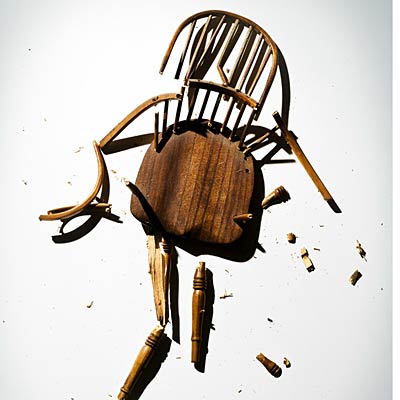
She was the MAMC library chair,

Always sought after, with lovers abound,

A medico could write for her, a verse and a song,

With a love declared openly, passionate and profound.


Beautiful, modest and strong,

And no matter how battered and worn,

The burden of our burgeoning weights,

She had always lovingly borne.

Barely strung together,

And sometimes missing a leg,

We held on to it with all our might,

Sprawled upon it like a scrambled egg.

A little shift here, and a little one there,

To catch up with the center of gravity,

We’d miraculously balance on to the chair,

Vowing never to let go of that concavity.

For she was the means, by which one could manage,

To grab a few prized inches, on the library desk,

And make the non – chair holders, go green with envy,

While they eyed, those with chairs, with looks hungry and grotesque.


Hour rolled by sitting on it,

Gazing at the empty space,

Pretending to read while day dreaming,

Or catching a nap, down on face.

Tee-hees on someone’s hair,

Tsk- tsks on the fashion blunders,

Exchanging meaningful looks,

Looking smug and giggling under.

Casting sidelong glances at the crushees,

And at the same time gagging,

At the love struck couple at the table,

For the public display of affection unflagging.

Catching once in a while, the avid reader,

Walk in with a truckload of hitherto unknown books,

As the room broke into psst – pssts and smirks,

With eyebrows reaching the ceiling and horrified looks.


We held on to the chair till we could hold no more,

And let it go, now and again, we had to, and we did,

To attend a call from ward, nature or a growling stomach,

Or to go to the reference section, to check out the movies grid.

And when we returned, we found to our horror,

That the chair had been stolen, nay kidnapped,

Taken away stealthily, the nanosecond we were out of sight,

While our friend – turned – security guard napped.

No ransom notes, no ransom calls,

And no remorse shown,

Just an unknown, heartless wretch who snuck behind your back,

To snatch your beloved, now claiming her to be his own.


Such had been the public ardour for the chair,

That even if we reserved her with a bag, like on an interstate bus,

Public declaration of the engagement, notwithstanding,

The cruel library dwellers would have separated us.

Nobody could ever come close,

To what that chair meant,

Oh, how she wooed us,

Moments cherished, and well spent.

Not a day passes by when we don’t look back,

No better a chair for ‘study’ designed,

We may have moved beyond med school,

But never such a superstar, did we find.

Oranges and Yellows

Orangeyellow

Orange is a tangy fruit,

A berry and a tangerine.

An orange marmalade spread,

A decorated pumpkin on Halloween.


The resplendent marigold flowers,

Goldfish, parakeets and butterflies,

The colour of a monk’s robes,

And of Tuesdays that Hanuman devotees idolize.


The fire that warms you up,

And autumn leaves on the driveway,

The breaking dawn and the fading dusk,

The brightest hue in cosmic display.


Yellow is the colour of lemons and mangoes,

Bananas, pineapples, corn and cheese,

Egg yolks, honey and butter,

And custard I could have more of, please ?


The mustard fields in the countryside,

A sunflower in bloom,

A canary in song,

And a bumblebee buzzing in the room.


The rubber duckies in your bathtub,

The smileys on your tee,

The minions that make you laugh,

And beer and booze and pee.


Yellow is a bright Lamborghini,

A slow down sign of traffic light,

Dorothy’s yellow brick road,

A soccer penalty that erupts into a fight.


Yellow journalism for sensational news,

Yellow pages for business,

The tropical yellow fever,

And yellow eyes in illness.


The haldi and the gold for the bride,

The bright, bright sun,

Yellow is sunshine and hope,

And a bunch of happiness and fun.

All the Single Ladies

1

India is not used to its single ladies. They are a cause of pressing concern to the bade-buzurg of the family and the unclejis and auntyjis of the neighbourhood. Their dhalti umar often invokes distress pleas from these well-wishers… “ Kab shaadi kar rahi ho tum,” “ Ladke dekhna to shuru karo,” or “ Ek ladka hai meri nazar mein, baat chalaun kya?” adding unabashedly, “ Ladke hi pasand hain na tumhe?”… Even the caste crazed elders find it their moral duty to let go off their rigid conditions and preach, “ Caste ke peeche mat pado. Koi bhi acchha ladka mile to shaadi kar daalo.”

Rephrasing Miss Austen’s opening line in Pride and Prejudice, it is a truth universally acknowledged, that a single Indian woman in possession of a good judgement and character, must be in want of a husband. Whether it’s an occupational pause or an emotional clause, poor health or dearth of wealth, the answer to all problems is marriage. Consequently, unlike married women, the single ones have a huge fan following – an army of chahne wale, whose anxiety for their ticking biological clocks burgeons in exponential proportion to their increasing age.  The nanosecond they enter their thirties, it’s a torrential downpour of “ Tees ki ho gayi hai !” “ Kab vyaah hoga?” “ Kab ghar basega?” and “ Kaise vansh chalega?”

The Indian family starts saving up gold for a girl’s wedding the day she is born. An academic achievement here and a career boost there is definitely worth an inaam or two, but ask the parents for jewellery and the instant reaction is, “ Sone ka kadaa ? Uska kya karegi abhi ? Teri shaadi mein denge. Chal ice cream khaane chalte hain aaj India Gate par.” So time and again, they are told ; Betaji, No shaadi, No Gold.

All the Hindu rituals are reserved for married women, be it the haldi ceremony of your beloved sibling or welcoming the groom at the entrance with an aarti ki thaali. The local auntijis are usually the bouncers at these functions, carrying a metaphorical “ No entry for the non-suhaagans ” banner, tut-tuting in perpetuum and casting their glaring, disapproving glances. Everybody is scared of the deadly virus of singlehood the non-suhaagans seem to be carrying, pledging to destroy the world of suhaagans with it.

The rest of the world is also not too kind to the Bhartiya single naari. Try going to an embassy for a visa and answering the visa officer’s questions…

“ Single ? Oh, I see. Why do you want to travel to our country ?”

“ I have a conference to attend.”

“ Hmm.. So you are single…”

They are just as scared of the single ladies tribe. For burdened with the constant nagging to settle down, and the periodical beeps from their biological clocks they have to put on snooze, these women may just marry their men and never come back. Much to the anguish of the members of the resident welfare associations of several colonies, many of whom were trying to fix up those thirty something kanyaas with their forty something divorced nephews.

It will take some time for India, to give a pappi or a jaadu ki jhappi to its single women. A little while longer, for the matchmaking enthusiasts, to supress their itch, to eye-roll and bitch. And a leap in spacetime continuum, to realize that the older kuunwaaries, are surprisingly not bechaaries. That they are not yet eager to devour the shaadi ka laddu ; for though they love the company of men, they love their independence too. And although these lovely ladies, dote on children and babies ; they are not ready to raise them yet, for all that this country may frown and fret.